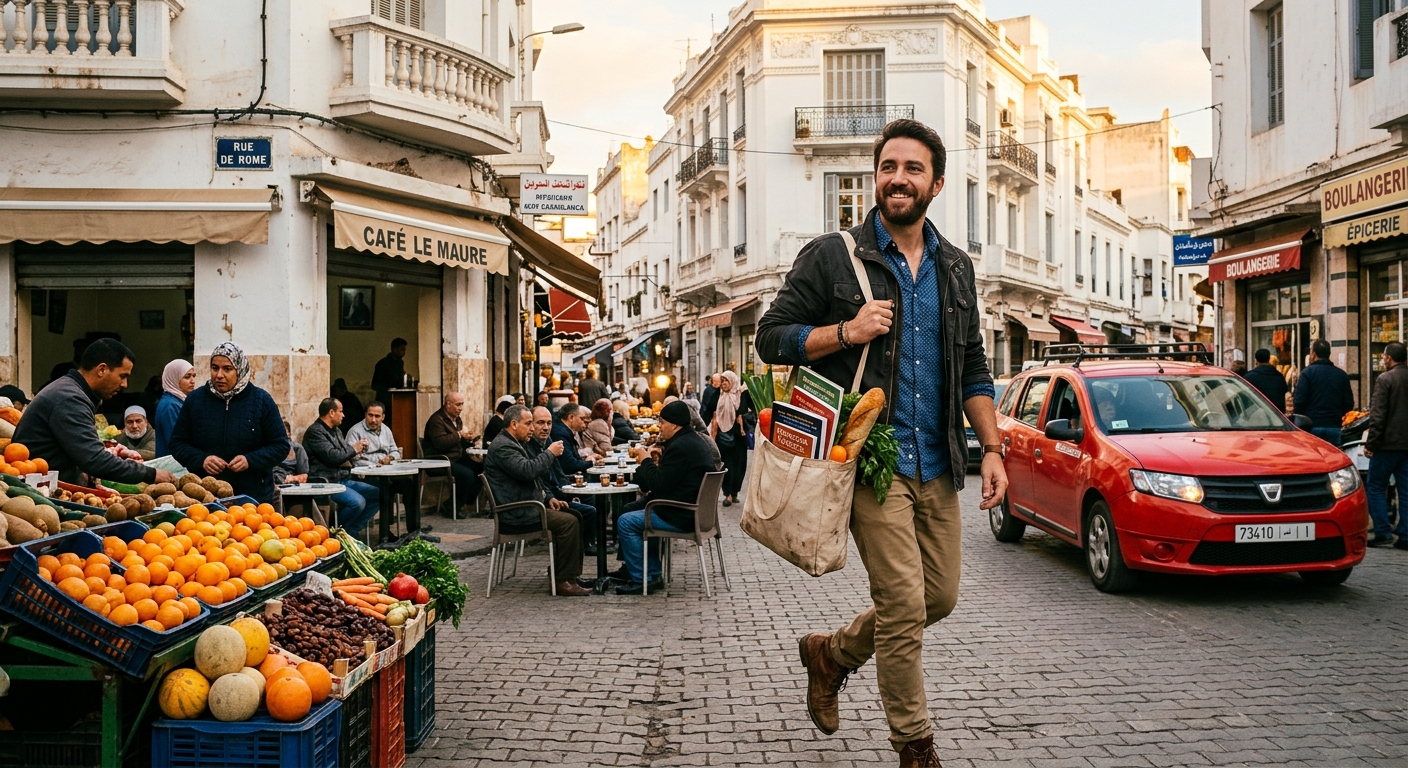

The first three months in Morocco decide how the next three years feel. Teachers who settle well usually get the practical foundations in place early, then put the same energy into building a life outside school.
Here’s what to expect, month by month.
Month one: paperwork, housing, and money
Your work authorisation. Your school submits your employment contract to the Ministry of Labour through its online platform, TAECHIR. Your contract becomes valid once the Ministry approves it. Keep certified copies of your degrees and teaching certificates within reach, because they’re part of the file.
Your residence card. Once your contract is approved, you apply for a carte de séjour (residence card) with the national police. Citizens of the EU, the US, Canada, and several other countries can enter without a visa for up to 90 days, and the residence card covers you after that. Other nationalities need a long-stay visa from a Moroccan consulate before arriving. Your school’s HR team usually guides you through each step, so ask them for the exact list for your passport.
Housing. Many international schools offer a housing allowance or temporary accommodation while you search. Furnished apartments are common in the main cities. Visit in person before signing, check the water heater and the building’s internet options, and expect to pay a deposit upfront.
Banking. Opening a local account usually goes faster once you have your residence card or a work certificate from your school. Until then, bring a card that works abroad without high fees. Cash is still widely used, especially in markets and small shops.
Month two: getting around and the languages
Getting around. Petits taxis are the everyday option inside cities. Ask for the meter, or agree on the fare before you set off. Casablanca and Rabat have tram networks, and the high-speed Al Boraq train connects Casablanca, Rabat, and Tangier, which makes weekend trips easy.
The languages. You’ll hear three or more in a single day:
- Darija, Moroccan Arabic, is the language of the street, the market, and your neighbours.
- French runs much of administration, banking, and business.
- Amazigh (Tamazight) is an official language, spoken widely across many regions.
- English is growing fast among younger Moroccans, and it’s the working language inside your school.
Learn a few dozen words of Darija in your first weeks. Greetings, numbers, and “thank you” (shukran) open doors that French alone won’t. Many schools can point you to a tutor or a class.
Month three: a life outside school
By now the paperwork is settling and the timetable feels familiar. This is the point where many international teachers either build a life in Morocco or start counting down the contract.
The ones who stay tend to do a few things early:
- Find one routine outside school. A gym, a running club, a weekly hammam, a Saturday market. Something that gives the week a shape beyond lessons.
- Make friends beyond the staffroom. Colleagues are a great start. Neighbours, language partners, and local clubs are what make a city feel like home.
- Travel early. The mountains, the coast, and the desert are all within reach. A weekend away in the first term builds attachment to the country.
- Ask for help early. Your school’s HR team and longer-serving colleagues have solved most of your problems before. A question in week ten saves a frustration in month six.
Ramadan, public holidays, and the rhythm of Friday prayers will shape your calendar too. Learning how they work, and joining in where you’re invited, is one of the best ways to become part of the community.
Built to last
Ninety days is enough to get the foundations right. Everything after that is the reason you came.
At EduConnect, we match teachers with schools where they’ll thrive, and we prepare them for the move before they arrive. If you’re considering a role in Morocco, we’d be glad to talk.
Sources
Administrative steps change, so confirm the current requirements with your school before you travel.